
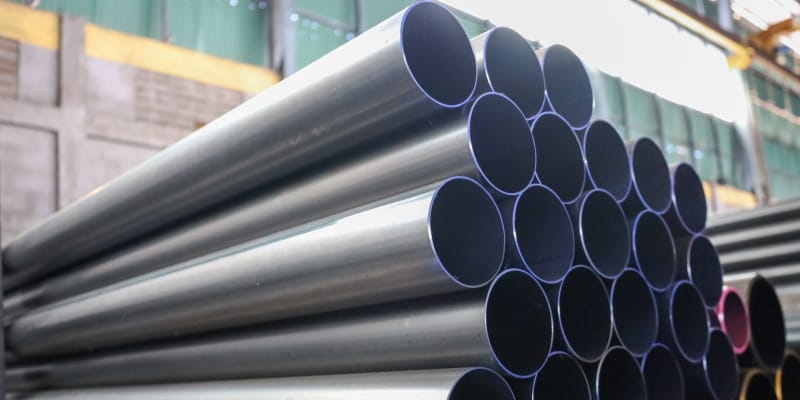
Galvanised Iron pipes, or GI pipes, are zinc-coated steel pipes commonly utilised in the construction of buildings, engineering, and plumbing. The zinc coating prevents the pipes from corroding, making them very resistant and functional in the transmission of gas, water, and sewage.
Today, GI pipes are indispensable units of major infrastructure projects for their ability to withstand environmental conditions and for their consistent strength. It is thus very important to make the right choice when investing in them by selecting renowned GI pipe suppliers.
Our guide helps you understand everything about GI pipes:
- Manufacturing process
- A, B, and C classifications
- Multiple use cases
- Selection criteria
Let’s commence with how these pipes are made.
GI Pipe Manufacturing Process: A Step-Wise Explanation
GI pipes are made from high-grade mild steel coils, which are an alloy of iron and carbon, sourced from certified suppliers.
- Step 1: The steel coils are precisely cut into tubes, as per ISO or ASTM standards, to prepare them for galvanisation. The edges are welded together to form a continuous pipe.
- Step 2: These pipes are thoroughly cleaned with acid to remove dirt and any signs of rust.
- Step 3: The cleaned steel pipes are subjected to galvanisation in two approaches:
Hot-dip galvanising — immersion of the pipes in molten zinc of nearly 450 degrees to give them a thin, protective coating which significantly improves their durability and corrosion resistance.
Electro-galvanising — application of a thicker and more durable zinc coating using electric current, which extends the durability of the pipes.
What is the Purpose of Coating GI Pipes With Zinc?
The coating is primarily to protect the pipes from rust and corrosion in two ways:
- By acting as a physical barrier between the steel and environmental factors such as moisture and oxygen.
- By serving as a sacrificial anode since zinc is electrochemically active. This means it corrodes first to protect the steel even when exposed to corrosive factors.
This robust manufacturing process helps create GI pipes of varying specifications, which we shall explore in the next section.
Decoding the Various Categories of GI Pipes
All GI pipes are manufactured under strict industry standards to ensure high quality, consistent performance, and safety. The general classification for these pipes is based on the thickness — a parameter that determines factors such as:
- The pipe’s mechanical strength
- Overall weight
- Load-bearing capacity
- Pressure capacity
As per IS: 1239, GI pipes are classified into three categories:
1. Class A or Light-Gauge GI Pipes
The GI pipes under this category have the thinnest walls and are marked with a yellow strip. This category of GI pipes is ideal for simple, low-pressure applications such as domestic plumbing and water supply, with minimal load.
2. Class B or Medium Gauge GI Pipes
GI pipes with moderately thick walls belong to the Class B category. These pipes are both durable and cost-effective, making them ideal for farm irrigation and municipal water distribution — medium-duty projects that do not require heavy usage. Class B pipes are marked with a blue strip.
3. Class C or Heavy-gauge pipes
This category of GI pipes has the thickest walls — ideal for heavy-duty applications such as structural scaffolding and industrial cooling systems. Marked with a red strip, the thick walls give these pipes the highest load-bearing capacity.
Understanding these classifications establishes the fundamentals you need to pick the right GI pipe category to align with your requirements. However, when it comes to making choices, people often confuse GI pipes with MS pipes, assuming they are one and the same.
What is the difference between GI pipes and MS pipes?
GI pipes are basically MS (Mild Steel) pipes coated with a layer of zinc. The difference between a plain MS pipe and a GI pipe is the zinc coating that enhances the GI pipe’s corrosion resistance, durability, and usage.
Also Read: GI Pipes: Shaping Excellence in Modern Construction
Matching GI Pipe Categories With Industrial Applications
Let’s explore how the success of an application aligns with the right GI pipe category.
Class A GI Pipes: For Low-Pressure and Non-Structural Use Cases
Class A GI pipes are preferred for their cost-effectiveness and functional efficacy in low-pressure and minimal load applications. Their thin walls make them ideal for:
- Electrical conduits
- Domestic plumbing systems in low-rise buildings
- Fencing agricultural lands.
Class B GI Pipes: For Medium-Pressure Systems and Standard Applications
Class B pipes with medium-thick walls are durable and affordable — making them ideal for:
- Water distribution in commercial and residential buildings
- Agricultural irrigation
- Moderate-pressure applications
Class C GI Pipes: For High-Pressure Applications
This category of pipes is built with thick walls to withstand extreme load and pressure, such as:
- Structural scaffolding
- Fire prevention and sprinkler systems
- Industrial pipelines
Ultimately, matching the right pipe category with its application based on pressure and load criteria is essential to ensure maximum safety and durability.
GI Pipes: Key Technical and Commercial Benefits
GI pipes exhibit robustness, durability, and value for money, which is why they are widely preferred for construction and industrial applications when the reliability of the material plays a significant role.
The technical benefits include:
- Exceptional Corrosion Resistance and Longevity: Where durability is concerned, the most common question is: What is the life expectancy of GI pipes? Thanks to their zinc coating, GI pipes have excellent corrosion and rust resistance. Those used in mild applications can last for more than 50 years. Pipes used in harsher environments may last for 20-50 years with regular maintenance. This remarkable durability makes them a worthwhile investment.
- Structural Integrity and Tensile Strength: GI pipes are forged from the finest mild steel and are engineered to work effortlessly regardless of the heavy loads and high-pressure applications. This engineered design contributes to an unmatched structural integrity and tensile strength to withstand any harsh industrial environment.
- Easy Maintenance and Affordability: Compared to stainless steel pipes, GI pipes require less maintenance and cost far less while delivering the same efficacy and operational continuity.
- Versatility and Eco-friendliness: GI pipes are easy to install, are 100% recyclable, and have incredible bending capabilities — features that align with modern application priorities.
With their multiple benefits and application capabilities, GI pipes are a smart and cost-effective choice. To ensure you get the most of these advantages, it is important to partner with a trusted manufacturer like MKK Metals.
Invest in Quality GI Pipes With MKK Metals
Ultimately, aligning pipe class with application needs forms the cornerstone of selecting optimal GI pipes — to make sure they withstand specific pressure and environmental demands while mitigating underspecification risk.
To ensure you buy the right GI pipes for your applications, partner with MKK Metal, Chennai’s most trusted steel product manufacturer, to source certified pipes that guarantee compliance and performance.
Contact MKK Metals today to secure the ideal GI pipes solution tailored for your project!